Our first community workshop took place on 12 November 2026 at the University of Oxford. This workshop focused on co-designing the activities of the project ‘Connecting Arts and Humanities Infrastructures for AI Capability ‘ by identifying common barriers, challenges and opportunities through community engagement.
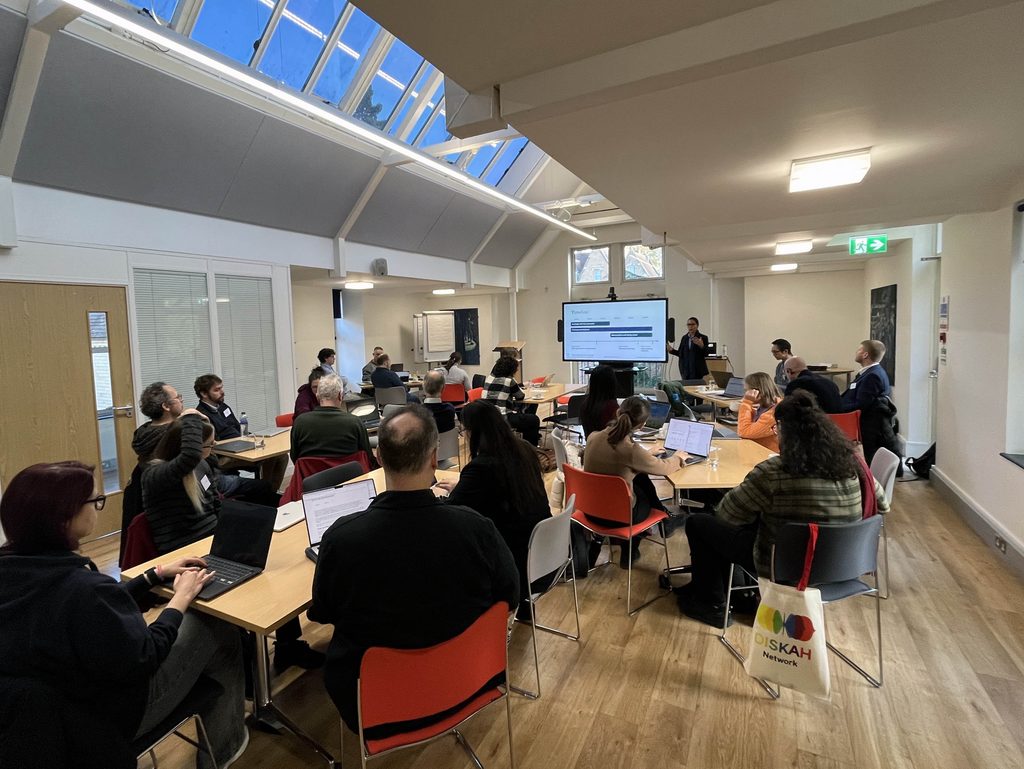
The workshop attracted interest from colleagues keen to explore the use of Artificial Intelligence (AI) in their research and practice. Twenty-five researchers and practitioners from organisations, including Higher Education Institutions (HEIs), Galleries, Libraries, Archives and Museums (GLAMs), and data services supporting research in the Arts and Humanities (A&H) domain, attended the event. During the day, attendees explored common challenges and opportunities relevant to their available data and compute. Skills and governance were also discussed in the context of responsible research and innovation. Shared concerns included potential harm to communities, environmental cost, lack of time and funding and data that is not ready for AI or has unclear licensing. Bias, reproducibility and dependence on commercial tools were also raised, together with a call for protected/trusted environments to handle copyrighted or sensitive material. At the same time, there was optimism about hardware and infrastructure being more accessible.
The opportunities for using AI to better structure, link, and discover data were identified by attendees. These include enriching metadata, connecting collections, supporting the identification of provenance and widening access for disabled users.
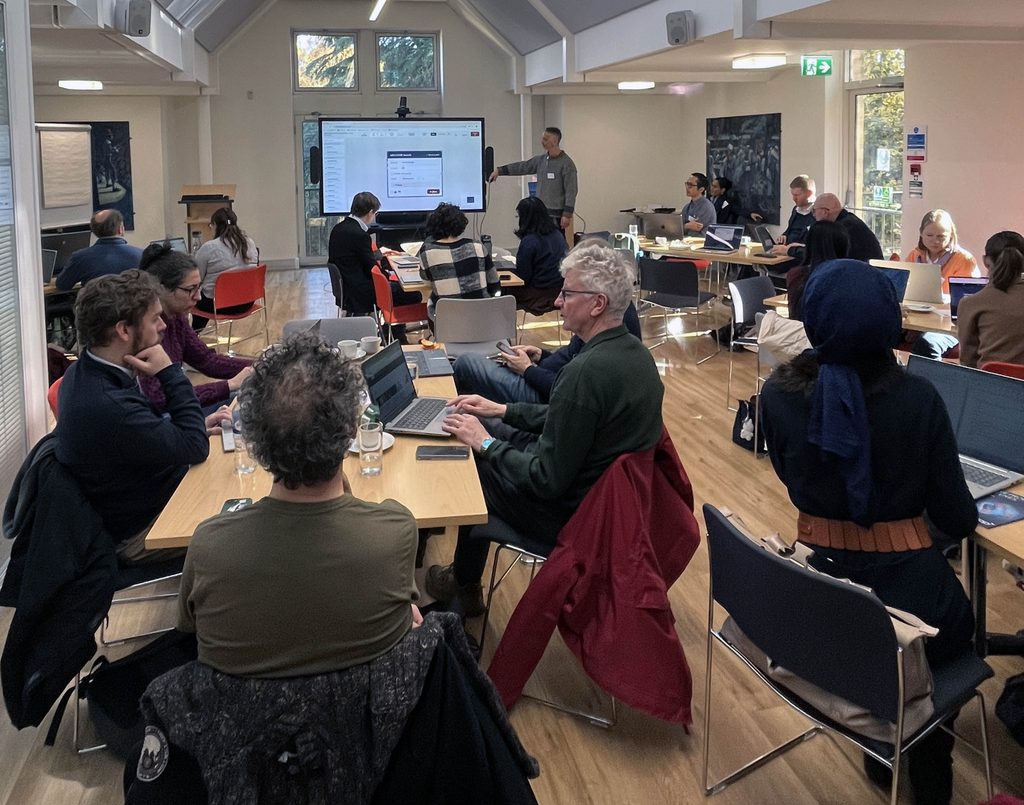
In addition, attendees had the opportunity to test a proof of concept developed by our colleagues at King’s Digital Lab, King’s College London, that connects data to AI models through a workflow interface. Attendees valued the ability to onboard their own datasets, work across several data services, and see results visually. Discovery, through searching and filtering, was identified as a key requirement, along with versioning, accessibility and transparency on AI use and environmental impact.
Community input will inform future activities, including signposting researchers to available infrastructure. Our next workshop will take place on 16 December at King’s College London.
We would like to thank our colleagues and project members from the University of Oxford, Prof Pieter François and Dr Giovanna Di Martino, for their support in organising the workshop.